
Microfinance & small business support

Our microfinance project is our flagship livelihoods programme. It was our first ever programme when we launched at the beginning of 2021. We began with a pilot programme providing 20 women, primarily caregivers who were widowed by the Ebola epidemic in 2015, with a small business loan. This vital capital enabled them to get their small businesses off the ground. Our business officers also provide mentorship and business support to ensure the people we are supporting can turn their ideas into sustainable and profitable businesses.
Since then, the programme has gone from strength to strength. We operate on 6-month cycles allowing beneficiaries to borrow increasing amounts if they need. Over the last three years, we have distributed 147 group loans and 420 individual microloans of between £55 and £165 per beneficiary. On average per cycle, 83% of our beneficiaries are women. In 2024 we started specifically seeking people with disabilities or caregivers with disabled children to receive support, reiterating our commitment to support the most vulnerable in the community. We estimate the programmes indirect beneficiary numbers to be over 1,200 in the last year.
We are now on our 10th cycle since the inception of the project and based on our learnings so far, we have evolved the project to allow those receiving support from Reseed to progress through three cycles of borrowing to ensure they can make savings and expand their businesses effectively and sustainably.
The team
Reseed needs to raise about £1000/month to support the team and operations in the field. Capital from the loan collection is automatically re-cycled back into the programme ready for the next distribution. This means any injection of capital into the project would simply enable the team to grown their case load, supporting more people to start, grow or diversify their own small business.
The programme has grown to have four full time Business Officers, each responsible for a case load of about 25 each. They move in the community every day visiting their clients and share business advice and support.
Here at Reseed we are passionate about supporting our local team to become more independent and gain skills which will allow them to progress in their careers. Capacity building is essential to decrease dependency and for the team to operate efficiently and independently.

Alfred, Business Officer

Salamatu, Business Officer

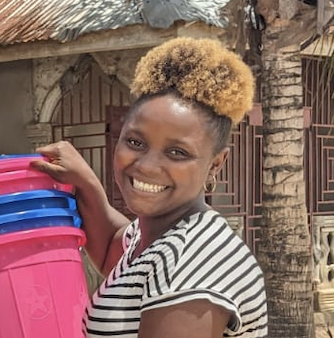
Ben, Business Officer
Eliza, Business Officer
Our impact in detail
431
818
people supported
total individual loans distributed
total loans distributed, of which repeat loans
137
total group loans distributed
228
Success stories

Ms. Conteh is a very enterprising woman. She makes school uniforms with the local school colours and sells them - pressed using a charcoal steal iron - every week at the Luma - a weekly market about 3 miles from Lunsar. However, school uniforms are not her only source of income! Using her microloan from Reseed, she is utilising her excellent cooking skills and now also prepares and sells hot lunch out of a small space on the highway in Lunsar (except Tuesdays - when everyone is at the Luma!).
This secondary source of income has meant Ms Conteh has a more stable and reliable income, especially important as school uniforms sell better at different times of year. The daily income from cooking allows her to invest in cloth to make into the uniforms allowing both businesses to grow and be successful simultaneously.

Most of our beneficiaries are women who were selling one or two products in the market and have used their microloan to grow and diversify their stock and products. Kadijah has a small space at the Lunsar covered market and has managed to grow her business in the last six months thanks to Reseed’s microfinance and business support. Kadijah says cooking oil - which due to her microloan she can now bulk buy by the gallon - is her best selling item. Here you can see her measuring - using a small tomato can - and separating cooking oil into small portions for customers.
Having completed all her repayments on time and proving reliable and hard working, Kadijah has applied to receive a further business expansion loan from Reseed to grow her market business even further.

Fatima qualified to be part of a group loan with other women in the Luma and increased the amount of fish she was selling. The idea behind supporting income generation in this context is that then the primary caregiver can be empowered to make family decisions based on their current needs. For example, sometimes Fatima might need to pay school fees, sometimes she might need malaria medication or a family member is sick. Even just a small increase in income can decrease her family’s vulnerability to shocks and challenges and support her and her family to move away from poverty.
Resilience and ability to adapt to challenges is limited to many people in Sierra Leone and Reseed not only supports businesses to start from scratch and grow, we are also supporting people to adapt and respond to changes in the context and environment, contributing to organic and sustainable business growth.
How you can support our work
£6 a month for 12 months means we can help more people like Fatima, Kadijah and Ms. Conteh with a business loan, training and ongoing advice and support so they can set up a sustainable business that provides them with the financial security they need.